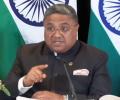
India has rejected allegations of declining media freedom and erosion of religious and minority rights, asserting that the country is a vibrant democracy that guarantees free speech to all.

The Supreme Court of India has voiced concerns about the potential consequences of individuals questioning religious practices in constitutional courts, warning it could lead to the fragmentation of religions and civilisation. A nine-judge Constitution bench is hearing petitions related to discrimination against women at religious places and the scope of religious freedom.

A nine-judge Supreme Court bench has reserved its order on petitions related to discrimination against women at religious places, including the Sabarimala temple, and the scope of religious freedom.

The Indian government has dismissed the US Commission on International Religious Freedom's (USCIRF) report on religious freedom in India, stating that it does not recognise the commission's authority to comment on the rights of Indian citizens.

The Maharashtra assembly has passed the Freedom of Religion Bill 2026, introducing strict measures to prevent religious conversions through coercion, fraud, or marriage, sparking debate over constitutional rights and religious freedom.
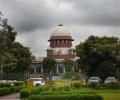
The Supreme Court of India has observed that the practice of excommunicating Parsi women for entering into interfaith marriages is prima facie discriminatory, emphasising that the right of conscience is a birthright.
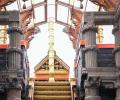
The Supreme Court observed that Hinduism is a way of life, stating that mandatory temple visits or rituals are not necessary to be considered a Hindu; even lighting a lamp at home suffices.
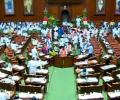
The Karnataka Assembly has passed two significant bills aimed at social reform and heritage preservation: the Karnataka Freedom of Choice in Marriage and Prevention and Prohibition of Crimes in the name of Honour and Tradition Bill, 2026, and the Karnataka Jnana Bhandar Manuscripts and Digitisation Bill, 2026.

On the 95th anniversary of Bhagat Singh's martyrdom, Utkarsh Mishra revisits the ideas and philosophy of the revolutionary giant.

Imtiaz Ali's new film Main Vaapas Aaunga is set to delve into the enduring trauma of the 1947 Partition, continuing Bollywood's complex cinematic journey of depicting one of history's most violent and impactful events.
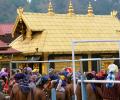
The Travancore Devaswom Board (TDB), managing the Sabarimala temple, argued in the Supreme Court that religious beliefs should be judged subjectively by the community, as the court hears petitions related to discrimination against women at religious places.

The Supreme Court has agreed to hear a plea on May 29 seeking a direction to the Nagpur Parsi Panchayat to treat a Parsi woman equally with her male counterparts, even after she marries a person of another faith, challenging a rule that allegedly strips Parsi women of their religious identity upon inter-faith marriage.
The Supreme Court of India has asserted its jurisdiction to determine what constitutes a superstitious practice within a religion, during a hearing on petitions related to discrimination against women at religious sites.

The Supreme Court questioned the chief priest of the Sabarimala Ayyappa Temple regarding the constitutionality of preventing believers from touching the deity, during hearings on discrimination against women at religious sites.

Do you know some of the thoughts, ideas, disciplines and items India has given the world?

UN experts have voiced serious concerns regarding the ongoing abduction and forced religious conversion through marriage of women and girls from minority communities in Pakistan, highlighting that impunity is fuelling the practice.

The Supreme Court of India has emphasised the importance of open access to all temples and 'maths' for everyone, warning that excluding any denomination would negatively impact Hinduism and divide society. This statement was made during hearings on petitions related to discrimination against women at religious sites and the scope of religious freedom.
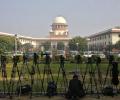
A nine-judge Supreme Court bench has commenced hearing on petitions related to discrimination against women at religious places, including the Sabarimala temple, and the scope of religious freedom across faiths.
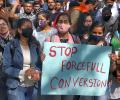
The Supreme Court has agreed to hear a plea challenging the validity of the Rajasthan Prohibition of Unlawful Conversion of Religion Act, 2025, potentially impacting religious freedom and state legislation.

The Chhattisgarh government has introduced a bill in the state assembly to prevent religious conversions carried out through force, inducement, fraud, or misrepresentation. The bill, titled the Chhattisgarh Dharm Swatantraya Vidheyak, 2026 (Freedom of Religion Bill, 2026), aims to curb conversions achieved through coercion or undue influence.

The Centre has informed the Supreme Court that the restriction on women of menstruating age entering Kerala's Sabarimala temple is a matter of religious faith and denominational autonomy, falling outside the purview of judicial review. Solicitor General Tushar Mehta argued that courts should not apply 'secular standards of reason' to religious practices.

Whether Freedom At Midnight 2 has a political agenda, a bias or two will be read into it, depending on the affiliation of who is watching, notes Deepa Gahlot.

"How many gods are there for Hindus? Three crores? There is Hanuman for those who are not married. There is another god for those who marry twice," Reddy said.
British Prime Minister Keir Starmer visited the site of a terrorist attack in London where two Jewish men were stabbed and addressed the rise of antisemitism in the UK.
The Shabari story in the Ramayana found mention before a nine-judge constitution bench of the Supreme Court on Wednesday while hearing petitions related to discrimination against women at religious places, including the Sabarimala temple in Kerala.
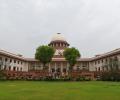
The Supreme Court of India is hearing petitions related to discrimination against women at religious places, including the Sabarimala temple in Kerala, and the scope of religious freedom practised by multiple faiths.

The Maharashtra government has introduced the Maharashtra Freedom of Religion Bill 2026, which aims to prohibit religious conversions carried out through coercion, fraud, or marriage, with stringent penalties for violations.

The Allahabad High Court has ruled that interfaith live-in relationships are legal and protected under the Constitution, granting protection to a couple facing threats from the woman's family.

The BRICS foreign ministers' meeting in New Delhi concluded without a joint statement due to disagreements over the West Asia conflict, with Iran blaming the UAE for the lack of consensus. India, as the host, issued a chair's statement highlighting the differing views.
The Chhattisgarh government has introduced a bill aimed at preventing religious conversions through force, inducement, or misrepresentation, sparking opposition and debate in the state assembly.

The Centre has supported the restriction on women of menstruating age entering Kerala's Sabarimala temple, arguing that the Supreme Court's 2018 judgement assumes male superiority.

The Delhi high court is reviewing a petition to remove journalist Rana Ayyub's tweets, and seeks her stand on a petition seeking the removal of the allegedly objectionable content from social media.
The Supreme Court of India has agreed to examine a constitutional challenge regarding gender discrimination within Parsi personal law, specifically focusing on whether a Parsi woman loses her religious identity upon marrying outside the community.
The Supreme Court is hearing petitions related to discrimination against women at religious places, including the Sabarimala temple. A nine-judge bench is examining the scope of religious freedom and the exclusion of women based on age and menstrual status.

India has rejected a report by the US Commission on International Religious Freedom (USCIRF) that criticised India's record on religious freedom and called for linking US security assistance and trade to improvements in this area.

A court in Maharashtra's Nashik district on Monday fixed May 2 for giving its verdict on the anticipatory bail plea filed by TCS employee Nida Khan, an accused in a case related to alleged sexual harassment and forcible religious conversion at the IT firm's local unit.
The Supreme Court of India questioned the Centre regarding the eligibility of non-devotees to challenge the customs of the Sabarimala temple in Kerala, during a hearing on religious freedom and discrimination against women at religious sites.
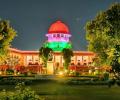
The Centre has asked the Supreme Court to reconsider its judgements decriminalising adultery and same-sex relationships, arguing they were based on a subjective application of 'constitutional morality'.
The Supreme Court has stated that roads cannot be blocked for religious activities and that while religious denominations have autonomy in worship, the government can interfere if secular activities are affected.

Thousands of Naga students and citizens rallied in Kohima, Nagaland, opposing the central government's directive to mandate the singing of Vande Mataram in official functions and educational institutions, citing concerns over secularism and religious freedom.
